Erbistock War Memorial
Erbistock is a village and community just within the Welsh border in Denbighshire, which lies on the River Dee, in a large horseshoe bend, to the west of Overton. It sits today within the County Borough of Wrexham. The men of Erbistock who fell during both World Wars are commemorated on two brass memorial plaques which are situated with the Parish Church, which is dedicated to St. Hilary. Also within the Church is a separate memorial plaque to the Sparling family: to the father, who was Rector of St. Hilary’s; his two sons who fell during WW1; and a third who died in New Zealand. There are also three war graves within St. Hilary’s Churchyard. In addition, two men from Erbistock have been identified to have died post WW2, one in the Korean War, so have been added below, in the Post WW2 Section. I have also taken the liberty to add the details of some other men with ties to Erbistock who fell during both wars, but who are not named on any of these memorial plaques. Note: there is also a separate, wooden, memorial panel, which commemorates the men of Erbistock who served and returned.
The Great War, 1914-1918
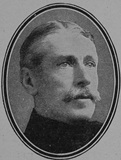
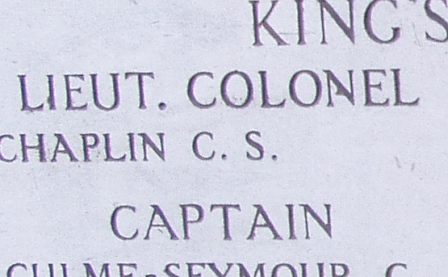
Charles Slingsby Chaplin, Lieutenant-Colonel, King's Royal Rifle Corps. Charles was born at Paddington, London on 31 May 1963, the son of Clifford Waterman Chaplin and Rosa Chaplin. He was educated at Eton and Pembroke College, Oxford before joining the City of London Regiment from the Militia in May 1885 and was then transferred to the Green Jackets, rising to the rank of Captain by 1894. He saw active service in Chitral and in the Boer War of 1899-1901, before being granted command of the 3rd Battalion, King’s Royal Rifle Corps in 1908. Charles had married Georgiana Eglantine Mary Hamilton in Ireland in 1893, but in 1903 the couple divorced, and on 29 September 1905 he remarried to Gwladys Hamilton Creek, the daughter of Colonel Stanley Creek, RWF, whilst stationed in Bombay. In 1912 he retired from the army and moved with his second wife to her family home at Erbistock House, Erbistock. With the outbreak of war in August 1914, he was mobilised from the Reserve of Officers and on 14 August was given command of the 9th Battalion, King’s Royal Rifle Corps. Following its formation at Winchester, the battalion moved to Aldershot to join 42 Brigade, 14th (Light) Division and embarked aboard the SS Victoria at Folkestone on 20 May 1915, before disembarking at Boulogne on the following day. Spending the night at Ostrohove Camp, on 22 May Charles marched the battalion to Pont de Briques, where it entrained for Cassel, then over the coming days the battalion marched to Dickebusch, in the Ypres Salient, where the 14th Division had been allotted the Hooge Sector. By 3 June the 9th KRRC had taken over dugouts in Ridge Wood, in readiness to enter the front line at St. Eloi for its first taste of trench warfare. Over the coming weeks the 9th KRRC rotated between the front line and billets in Vlamertinghe, then on 12 July relieved the 9th Rifle Brigade to begin a week long spell in the line. On 19 July the battalion was relieved and returned to billets, before returning to the line again on 26 July. On 29 July Charles received orders to lead his battalion on an attack against the German lines near Hooge, and at 13.30, following an intensive artillery bombardment, the 9th KRRC climbed from their trenches and charged. Fighting raged through the night into the following day, 30 July 1915, and just after their objectives had been taken, Charles fell dead, shot through the head by a German bullet. The 52-year-old has no known grave and is commemorated on the Menin Gate Memorial, Ypres. His son, Patrick Rupert Slingsby Chaplin, was killed in WW1.
Alfred Richard Davies, Private, 200987, Royal Welsh Fusiliers. Alfred was born in 1882, the son of Edward Davies and Sarah Davies (nee Roberts), of Manley Cottage, Erbistock. He enlisted at Wrexham into the Royal Welsh Fusiliers and was drafted to France at sometime in 1916, joining the ¼th Battalion, Royal Welsh Fusiliers, which was the Pioneer Battalion to the 47th Division. The division had taken part in the Battle of Loos in September 1915 and in the Spring of 1916 had fought a desperate defensive action following an attack by the Germans at Vimy Ridge. The division later moved south to the Somme, taking part in the Battle of Flers-Courcelette, and then at the Battle of Le Transloy, where the Division captured Eaucourt l'Abbe. The Division then took part in the Attacks on the Butte de Warlencourt during the later stages of the Somme offensive. Early in 1917 the Division moved north to Belgium, and took part in the Battle of Messines Ridge, then in November 1917 fought at the Battle of Cambrai. In March 1918 the Division was situated at Metz, near St. Quentin, and faced the German Spring Offensive here on 21 March, fighting at the Battle of St Quentin, and then in the rearguard action at the First Battle of Bapaume, as the line was pushed back. Alfred was wounded during fighting near Martinsart and died of his wounds on 6 April 1918. The 36-year-old is buried in Martinsart British Cemetery, France.
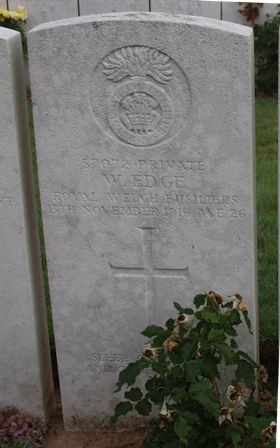
William Edge, Private, 57072, Royal Welsh Fusiliers. William was born in 1891, the son of George Edge and Elizabeth Edge (nee Jones), of Bankers Cottage, Erbistock. He worked as a farm labourer at Fields Farm, Erbistock prior to enlisting into the Denbighshire Yeomanry at Wrexham. William was drafted to France in 1916, joining the 10th Battalion, Royal Welsh Fusiliers, which was attached to 76 Brigade, 3rd Division. The Division saw heavy fighting during the Actions of the Bluff in February 1916 and then at the Actions of the St Eloi Craters from 27 March to 16 April. The battalion continued to suffer during these months at St. Eloi, coming under a gas attack for the first time on 29/30 April. By the middle of June, the Division had moved out of the Ypres Salient to billets around Eperlecques, where intense training was carried out prior to moving to the Somme sector by 2 July. The main Somme offensive had opened on the previous day, and the 3rd Division was ready to enter the fray, bivouacking at Bronfay Farm by 9 July and on 13 July moved into the captured German lines at Montauban Alley. The 10th RWF took part in heavy fighting over the coming days, and on 19 July received orders for an assault on Delville Wood. Just after midnight the following day the battalion moved forwards and became caught in in terrible fighting within the wood, the fighting of such severity that two men of the battalion were awarded the Victoria Cross. On 25 July the shattered battalion was relieved and moved into reserve and did not move back into the line until 17 August, when the battalion attacked Lonely Trench. On 23 August the Division moved out of the line to rest and moved to Noeux-les-Mines, near Loos. After a month there, the Division moved back into a rest area for further training before moving back south to the Somme and by 12 November took over trenches at Serre. On the following day, 13 November 1916, the Division launched an assault against the German positions at Serre. The 10th RWF reached Serre village, but the flanking battalions failed to keep up, and heavy losses were suffered, with almost 300 officers and men killed, wounded, or missing. Among the dead was William, who had been killed during the heavy fighting of 13 November 1916. The 26-year-old is buried in Queens Cemetery, Puisieux, France.
James Robert Jones, Private, 42854, Alexandra, Princess of Wales's Own Yorkshire Regiment. James was born in 1892, the son of Thomas Jones and Margaret Jones (nee Walker), of Twining Hill, Overton Bridge. He enlisted at Ruabon into the Royal Field Artillery, but upon being drafted to France was posted to the 7th Battalion, Yorkshire Regiment, which was attached to 50 Brigade, 17th (Northern) Division and had been on the Western Front since July 1915. The division had spent its initial period of trench familiarisation in the southern area of the Ypres salient, taking part in the fighting at the Bluff during February 1916 before moving south to take part in the Somme offensive. The division then fought at the Battle of Albert, capturing Fricourt at heavy cost during the opening days of the battle. The division then saw further action the following spring, during the Battle of Arras, taking part in the First and Second Battles of the Scarpe and the Capture of Roeux, before moving north into the Ypres Salient again at the beginning of October 1917, to take part in the First and Second Battles of Passchendaele, and reached their camp at Proven on 5 October. Over the coming days battalions of the division crossed the canal bank and began relieving other units from the front line, with the 7th Yorks relieving the 10th Sherwood Foresters on the Yser Canal on 10 October. After a week in the line the battalion was relieved and moved back to Landrethun-Les-Ardres to rest and begin a training regime, before moving to camp at Elverdinghe on 7 November, ready to take the line again. James was killed whilst the battalion was working on trenches near Bridge Camp on 29 November 1917. The 24-year-old is buried in Canada Farm Cemetery, Belgium.
Meyrick Entwisle Lloyd, Captain, Royal Welsh Fusiliers. Meyrick was born on 31 May 1880, the son of Henry Lloyd, JP, and of Caroline Dorothea Lloyd (nee Entwisle), of Pitsford Hall, Northampton and of Dolobran Isaf, Meifod. He was educated at Eton College and then at Magdalene College, Cambridge prior to gaining a commissioned as Second Lieutenant into the 4th Battalion, the Duke of Cambridge’s Own (Middlesex) Regiment on 18 May 1899. By 1902 Meyrick had transferred to the 1st Battalion, Royal Welsh Fusiliers. He continued to serve with the regiment over the coming years and had risen to the rank of Captain by the time he married Elizabeth Grace Ramsay at Cheltenham on 1 October 1912, and the couple bought another home, Trewythen, Gresford. Following the outbreak of war, Meyrick embarked for France with the 1st Battalion, Royal Welsh Fusiliers. He embarked for France with the battalion at Southampton aboard the SS Winifredian on 4 October 1914 and disembarked at Zeebrugge on 7 October. The 1st RWF was attached to 22 Brigade, 7th Division, and had gone to Zeebrugge to defend the port, but it was already in the process of falling to the Germans, so the 7th Division moved out of the city, marching via Bruges to Ostend, where the Division then entrained for Ghent. The Division then marched to Meirelbeke, and dug in defensive positions, in support of the French and Belgians. It soon became apparent that the Germans had broken through the Belgian lines, so on 11 October the 7th Division received orders to withdraw, reaching Hansbeke by the following day, and over the coming days continued to withdraw, marching through Thielt to Roulers, and by 14 October reached Ypres, becoming the first British Division to hold the city. The remainder of the BEF moved to Ypres from the Marne soon afterwards, in time to take part in the desperate defence of Ypres, when the Germans began attacking the city on 19 October. Meyrick was reported as killed during the heavy fighting which followed but had been wounded and taken prisoner by the Germans on 20 October. He died of his wounds in a German field hospital nearby on 23 October 1914. Meyrick was reportedly buried near the field hospital at Passchendaele, but no trace of the body of the 34-year-old was ever found, so he is commemorated on the Ypres (Menin Gate) Memorial, Belgium. Following his death his widow purchased Rose Hill, at Erbistock from Sir Frederick Kenyon, then on 8 January 1919 remarried to Major Edward Reginald Kearsley, DSO, of the Royal Welsh Fusiliers. Meyrick is not commemorated on the Erbistock war memorial, but on the Meifod and Gresford war memorials nearby.
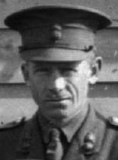
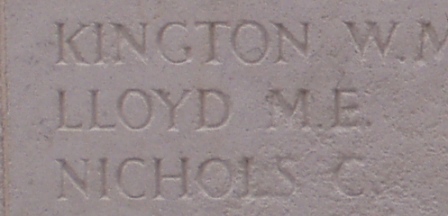
John Roberts, Guardsman, 9919, Grenadier Guards. John was born at Erbistock in 1881, the son of Charles Roberts and Mary Roberts (nee Dodd), of Bryn, Erbistock. He was baptised in the Church there on 15 May 1881. John left home to work on the railways as a platelayer at Birkenhead and on 7 April 1907 married Emily Corker at St. Mary’s, Birkenhead. The couple settled at 49, Lowther Street, Birkenhead, where their three sons were born over the coming years. John enlisted into the Grenadier Guards soon after the outbreak of war and was drafted to France on 12 November 1914, joining the 2nd Battalion, Grenadier Guards, which was at Ypres, attached to the 4th (Guards) Brigade, 2nd Division. The Division had suffered terrible casualties during the First Battle of Ypres the previous month, and all its battalions were rebuilding strength when John arrived, joining the battalion in the line near Polygon Wood. He would have taken part in the fighting of 17 November, when the Germans launched their last assault on Ypres and his battalion suffered heavily during the day before being relieved two days later and moving back to billets at Meteren. The first winter of the war was mostly of a stagnant nature, with little major fighting along the British front, and the Christmas Truce, held nearby at Ploegsteert Wood, showed there was no real animosity between each side at that time. John’s battalion took over trenches near Rue de Bois in the New Year, in horrific conditions, with the trenches likened to fast flowing rivers. John was killed in action during a skirmish here on 4 February 1915, when a German attack at Cuinchy forced a counterattack by the 4th (Guards) Brigade. The 32-year-old is buried in Cuinchy Communal Cemetery, France. John is not commemorated on the Erbistock war memorial, likely because his parents had died some years prior to the war.
Arthur Edward Sparling, Lieutenant, Essex Regiment. Arthur was born in 1878, the son of Reverend Philip William Sparling and Fanny Sparling (nee Nicks). By 1887 the family had moved to Erbistock, where Reverend Sparling had become Rector, and the couple resided at the Rectory, Erbistock for at least the next 14 years, before moving to Holme-Nest, Runcton, Norfolk. Arthur served in the Boer War of 1899-1902, with Gorringe's Flying Column, seeing action at Belmont and Cape Colony. He trained as a solicitor and by 1911 was lodging at 8 Salisbury Avenue, Colchester, where he completed his examinations before entering the family firm, Sparling & Sons, of 30, Queen Street, Colchester. Following the outbreak of war Arthur was commissioned into the 2/8th Battalion, Essex Regiment following its formation at Colchester in September 1914. Sadly, Arthur became ill whilst on active service and died at his parents’ home at Runcton on 19 February 1915. The 36-year-old was buried in St. James Churchyard, Runcton Holme, Norfolk. Arthur is not commemorated on the Erbistock war memorial, although he is commemorated on a family memorial, alongside his two brothers and father, in St. Hilary’s Church, Erbistock.
Wilfred John Sparling, Private, 81835, Canadian Infantry. Wilfred was born at Gloucester on 17 October 1882, the son of Reverend Philip William Sparling and Fanny Sparling (nee Nicks). By 1887 the family had moved to Erbistock, where Reverend Sparling had become Rector, and the couple resided at the Rectory, Erbistock for at least the next 14 years, before moving to Holme-Nest, Runcton, Norfolk. Wilfred was educated at Bangor University and had served for five years with the 1st Volunteer Battalion, Royal Welsh Fusiliers, before emigrating to Canada, to start a new life as a farmer. On 18 December 1914 he enlisted into the Canadian Infantry at Winnipeg and joined the 32nd Battalion, Canadian Infantry, sailing from Halifax, Nova Scotia for England with the battalion aboard the SS Vaderland on 23 February 1915. Upon arriving in France on 3 May 1915, Wilfred was posted to the 8th Battalion, Little Black Devils, which was attached to the 2nd Canadian Brigade, 1st Canadian Division. The Division had been devastated during the Second Battle of Ypres, which was drawing to a close when Wilfred arrived. He saw his first major action during the Battle of Festubert just weeks later, on 19 May, followed by more fighting at Givenchy in the first week of June. At the end of the month the Canadians moved to the Ploegsteert sector. Wilfred was killed in action here on 13 July 1915. The 33-year-old was originally buried behind the trenches by his comrades, but his grave was subsequently lost following further fighting in the area and he is now commemorated on the Menin Gate Memorial, Ypres, Belgium. Wilfred is not commemorated on the Erbistock war memorial, although he is commemorated on a family memorial, alongside his two brothers and father, in St. Hilary’s Church, Erbistock.
Samuel Maurice Wynne, Private, 32420, South Lancashire Regiment. Samuel was born in 1897, the son of Henry Wynne and Mary Jane Wynne (nee Hughes), of Overton Bridge, Ruabon. He enlisted into the army in Wrexham and was posted to the 2/4th Battalion, South Lancashire Regiment. The battalion was formed at Warrington in September 1914, moving to Ashford in February 1915 to join 172 Brigade, 57th (West Lancs) Division. In June 1916 the division moved to Mytchett, Aldershot, then in October 1916 to Blackdown, spending the winter there before embarking for France, from 7 February 1917, the 2/4th South Lancs landing at Boulogne on 16 February 1917, before the entire division moved to positions near Ypres, taking part in the Second Battle of Passchendaele, before wintering in the Ypres Salient. In 1918 the division had a relatively peaceful few months before moving to the Arras Sector and taking part in the great offensive in August 1918, fighting in the 1918 Battle of the Scarpe, and at the Battle of Drocourt-Queant. The division then took part in the attack on the Hindenburg Line during the Battle of the Canal du Nord from 27 September, helping capture the city of Cambrai itself. On 1 October 1918 Samuel’s battalion was bivouacked in La Folie Wood, near Fontaine-Notre-Dame, when a German aircraft spotted the men and dropped several bombs. Samuel was one of two men killed during the attack, while an officer and 18 other ranks were wounded. The 21-year-old is buried in Sunken Road Cemetery, Boisleux-St. Marc, France.
World War Two, 1939-1945
Patrick Rupert Slingsby Chaplin, Major, 47545, Kings Royal Rifle Corps. Patrick was born at Monmouth in 1910, the son of Colonel Charles Slingsby Chaplin and Gwladys Hamilton Chaplin (nee Creek), of Erbistock House, Erbistock. Educated at Eton, like his father, Patrick left to take up a commission into the Kings Royal Rifle Corps, his fathers’ old regiment. By the time that war erupted he had risen to the rank of Major, and was second in command of the 2nd Battalion, Kings Royal Rifle Corps. The battalion was in France with the BEF in 1940, as part of the 30th Infantry Brigade, 1st Armoured Division and was decimated during the defence of Calais, where the brigade helped enable the Dunkirk evacuation to proceed. The battalion was reformed in the summer of 1940 and transferred to the 22nd Armoured Brigade, 1st Armoured Division before embarking for North Africa. On 26 May 1942 the Germans launched an offensive against the British Lines in North Africa, near the village of Gazala, and on the following day the 1st Armoured Division counter-attacked, engaging the 15th Panzer Division. Patrick was killed in action during this Battle of Gazala on 1 June 1942. The 32-year-old has no known grave and is commemorated on the Alamein Memorial, Egypt. His father had been killed in WW1.
Charles Kenneth Davies, Lieutenant Colonel, 15590, Royal Engineers. Charles was born at Meerbrook, Derbyshire on 29 October 1898, the son of Charles Edward Davies and Elsie Davies (nee Billinge). He was educated at Bedford School from 1911 until 1916, when he left to enlist into the army and served on the Western Front with the Royal Engineers for the remainder of the war, gaining a commission as Second Lieutenant in 1918. He remained in the Royal Engineers after the war and slowly made his way up through the officer ranks. Charles married Celia Constance Nichols in Surrey on 6 September 1924 and by the time war broke out, the couple were residing at Green Lane, Chilworth, Hampshire, where Charles was a Major General and Director General with the Ordnance Survey. The couple then moved to Erbistock Rectory soon afterwards. Little else is presently known of him, but Charles died on 22 August 1943, whilst on active service. The 44-year-old is buried in St. Hilary’s Churchyard, Erbistock. Charles is not commemorated on the Erbistock war memorial.
Leonard William Edge, Fusilier, 14387195, Royal Welch Fusiliers. Leonard was born on 27 August 1924, the son of George Edge and Blodwen Shore Edge (nee Roberts), of Slater’s Cottage, Erbistock. Leonard enlisted into the army and was posted to the 4th Battalion, Royal Welch Fusiliers, a Territorial Army unit, which was attached to 158 Brigade, 53rd (Welsh) Division. The battalion was mobilised at the outbreak of war, when the Division moved to Northern Ireland to begin garrison duties. The Division then moved to Pembroke Dock, before moving again to the south of England, where it trained in readiness for the D-Day Landings. On 24 June 1944 the 4th RWF left England for Normandy, and landed at La Riviere near Ver Sur Mer. The Division then took part in heavy fighting over the coming weeks, as part of the effort to break-out of the Normandy beachhead, seeing heavy fighting during the attacks on Évrecy from 17 July. Leonard was killed in action on 19 July 1944, during heavy fighting around Le Bon Repos Crossroads. The 19-year-old was reported as missing but was later declared to have been killed in action on that date. He has no known grave, so is commemorated on the Bayeux Memorial, France.
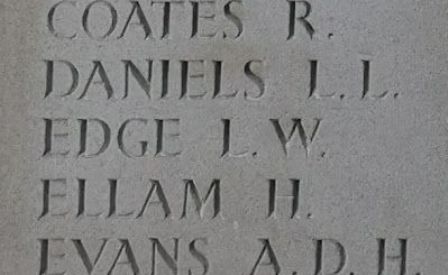
Ronald Standring Hamlet, Sub-Lieutenant (A), Royal Naval Volunteer Reserve. Ronald was born on 20 April 1921, the son of Jesse Hamlet and Eliza Ellen Hamlet (nee Lester), of Rose Hill Lodge, Erbistock. Ronald was working as a Drawing Office Junior when war erupted and enlisted into the Royal Naval Volunteer Reserve, as his father had done during WW1. He trained as a Telegraphist before joining the Fleet Air Arm and joined 766 Squadron, at HMS Landrail, the Royal Naval Air Station at Machrihanish, Scotland. On 1 May 1943 Ronald was acting as an Observer aboard a Fairey Swordfish II, which had taken off on a night anti-submarine bombing training run, when the aircraft crashed into the sea on the Skipness Bombing Range, Kilbrannan Sound, Kintyre, killing Ronald and his pilot. Ronalds body was recovered from the sea and brought home for burial in St. Hilary’s Churchyard Extension, Erbistock.
Richard Ernest Lloyd, Lance Serjeant, 891655, Royal Artillery. Richard was born on 29 March 1919, the son of Ernest Henry Lloyd and Margaret Rosalie Lloys (nee Swainson), of Bryn Afon, Erbistock. He enlisted into the Royal Artillery and was posted to 244 Battery, 61 (The Denbighshire Yeomanry) Medium Regiment, Royal Artillery. The regiment had been formed from the Carnarvonshire Battery, Royal Garrison Artillery and the Denbighshire Yeomanry after WW1, with its Headquarters at Bangor. When the Territorial Army was mobilised on 1 September 1939, just ahead of the outbreak of WW2, the regiment mobilised at Colwyn Bay, embarking for France to join the British Expeditionary Force, and became attached to the 2nd Infantry Division in I Corps, landing in France with the Division on 21 September 1939. The Division then moved to positions east of the French city of Lille. Following the German invasion of the Lowlands on 10 May 1940, the 2nd Division took up defensive positions on the La Bassée Canal and River Aa. Richard appears to have been wounded very early on in the subsequent fighting as he was evacuated back to Britain and died of his wounds at the Royal Sussex County Hospital, Brighton on 25 May 1940. The remains of the 21-year-old were conveyed home, and he was buried in St. Hilary’s Churchyard Extension, Erbistock. Richard is not commemorated on the Erbistock war memorial.
Post WW2
Jeremy Michael Bell, Junior Technician, R8124760, Royal Air Force. Jeremy was born on 8 January 1959, the son of David Southam Bell and Edith Jennifer Bell (nee Bray), of Hillside, Erbistock. He joined the Royal Air Force upon leaving school and was posted to RAF Valley, on Anglesey, as a Junior Technician. Jeremy died in the Manchester area on 12 February 1979, aged 20.
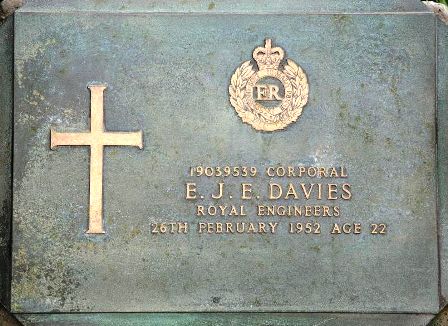
Eric John Edward Davies, Corporal, 19039539, Royal Engineers. Eric was born at Birkenhead on 4 May 1929, the son of Arthur Edwin Davies and Margaret Davies (nee Appleton). The family was originally from Erbistock but had moved to Birkenhead for work. Eric married Sheila Emmie Seyferth at Wallasey in 1949. Still in school during WW2, Eric had enlisted into the Royal Engineers after the war and was posted out to Korea with the Royal Engineers following the start of the Korean War, which began on 25 June 1950 as a result of tension between the ruler of the Communist North Korea and the moderate South Korea, resulting in a series of clashes along the 38th Parallel, the dividing line set by the US Army after WW2. Eric was killed in Korea on 26 February 1952. The 22-year-old is buried in the UN Memorial Cemetery, Pusan, Korea. Eric is not commemorated on the Erbistock war memorial.